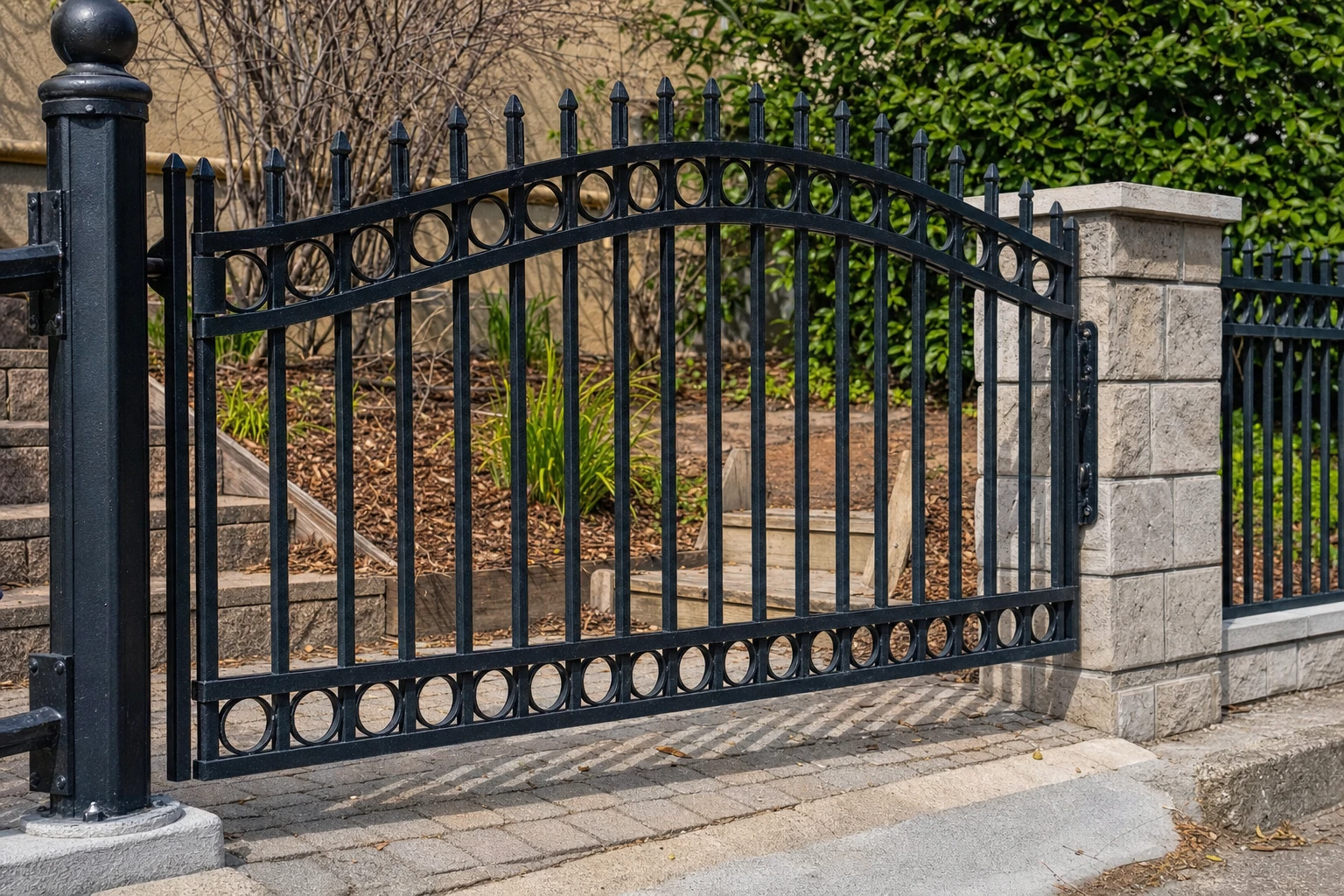
Salt air, fog, sprinkler overspray, and road dust do not ruin most iron fence gates overnight. The bigger problem is simpler: people wait until the gate looks rough before they start maintaining it. By then, small paint failures, stiff hinges, and tiny rust spots have had months to spread.
That mistake is especially common in the San Francisco Bay Area. A gate can look fine from the street while moisture keeps collecting around joints, latch hardware, and lower rails. If you want your iron fence gate to keep looking new, the goal is not occasional heavy cleanup. It is light, regular attention before wear becomes visible.
The Most Common Mistake, Waiting for Obvious Damage
A lot of homeowners treat gate maintenance like a repair job instead of a routine habit. They notice a squeak, a little stiffness, or a dull patch in the finish and assume it can wait. The problem is that gates have more moving parts than fixed fence panels, so small issues show up faster and spread farther.
A Bay Area gate also deals with conditions that fixed sections do not handle the same way. Hinges move, latches rub, and the bottom edge often sees the most moisture. In coastal and foggy areas, metal can stay damp longer than you expect. Inland neighborhoods may deal more with heat, dust, and irrigation overspray. In both cases, delay is what turns normal wear into visible aging.
Clean the Gate More Often Than You Think You Need To
A gate that looks “not that dirty” can still be holding moisture-trapping grime. Dust, pollen, salt residue, and air pollution settle into corners and decorative details, especially around welds and hardware. If that buildup stays in place, it can slowly wear on the protective finish.
A gentle wash with mild soap and water usually does more good than people expect. Focus on the lower portions of the gate, hinge areas, latch points, and any decorative scrollwork where grime collects. Skip harsh abrasives unless a contractor recommends them for a specific finish. The point is to remove buildup without scratching the coating that protects the iron underneath.
For homeowners comparing styles and construction details, our residential iron fence installation page shows the kind of iron fencing that benefits from consistent upkeep, especially at the gate where movement creates more wear.
Pay Attention to Hinges, Latches, and Contact Points
The finish on a gate usually fails first where metal parts move against each other. That is why the question is not just how to clean the gate, but how to maintain your iron fence gates in the Bay Area without missing the working parts.
Check the hinges and latch every few weeks during wetter months and at least seasonally the rest of the year. If the gate starts dragging, sticking, or closing unevenly, do not assume it only needs force or a quick oil spray. Misalignment can scrape away protective coating at contact points, which exposes fresh metal and speeds up rust.
- A simple routine helps:-Wipe hardware clean: Remove dirt before adding any lubricant.
- Use the right lubricant: Choose a product suitable for exterior metal hardware.
- Check for rubbing: Look for shiny worn spots where metal is contacting metal.
- Watch the bottom edge: This area often shows moisture damage first.
That short check takes far less time than repainting a neglected gate.
Small Paint Chips Are Not Cosmetic Problems
One of the most expensive-looking gates on the block can start aging from a chip no bigger than a coin. People often ignore these spots because the rest of the finish still looks good. On iron, that is the wrong call. Once the coating opens up, moisture gets direct access to the metal.
If you see a nick, scratch, or bubbling finish, inspect it right away. Surface rust can sometimes be addressed early before it spreads into a larger refinishing job. The key is not to keep touching up blindly with any black paint in the garage. Finish compatibility matters, and poor touch-ups can trap problems instead of solving them. If the damage is spreading around joints, welds, or hardware, it is smart to get a professional opinion.
Bay Area Moisture Problems Often Start at Ground Level
Fog and coastal air get most of the attention, but many gate problems begin much lower. Soil contact, planters pushed too close to the frame, and sprinkler spray hitting the same area every morning can keep the base of a gate damp for long periods.
Take a look at the clearance around the gate. If mulch, vines, or dense shrubs are holding moisture against the metal, trim them back. If irrigation hits the gate directly, adjust the spray pattern. That one change can make a real difference in preserving the finish. Gates need airflow just as much as they need cleaning.
If your property includes decorative or specialty fencing, you may also find helpful design context on our residential ornamental fence installation page, where finish and detailing play a big role in appearance over time.
Know When Maintenance Has Turned Into Repair
The line between maintenance and repair is easy to miss. A squeak is maintenance. Rust flaking at the hinge plate is repair. A dirty latch is maintenance. A gate that no longer closes square is repair. The earlier you spot that change, the better the gate tends to look in the long run.
If your gate already has finish failure, rust spread, loose hardware, or alignment issues, it may be time for a professional assessment instead of another quick cleanup. Sam’s Iron Fence Company provides iron fence installation, fabrication, and repair throughout the Bay Area, and you can request help through our free estimate and consultation contact page. The best-looking gates in 2026 are usually not the newest ones, they are the ones that never got ignored.