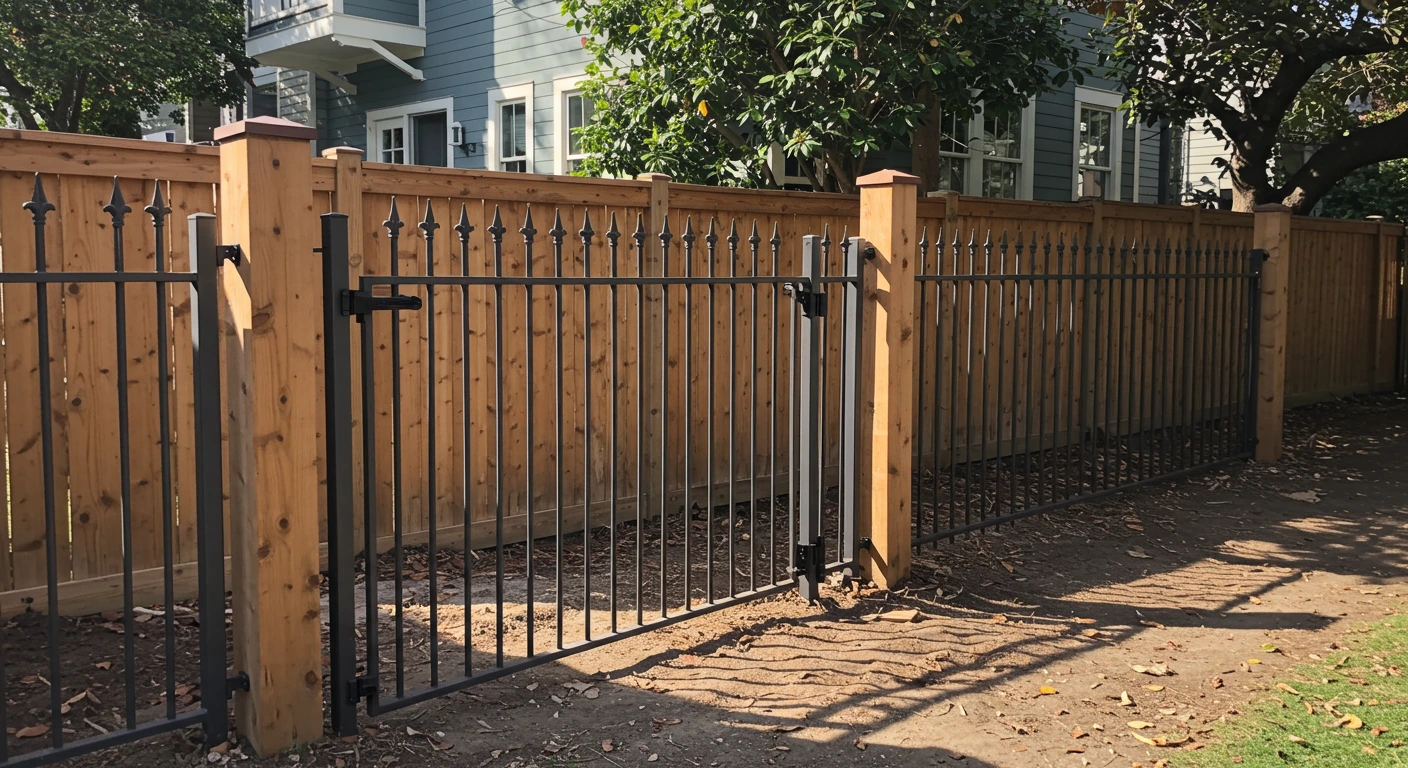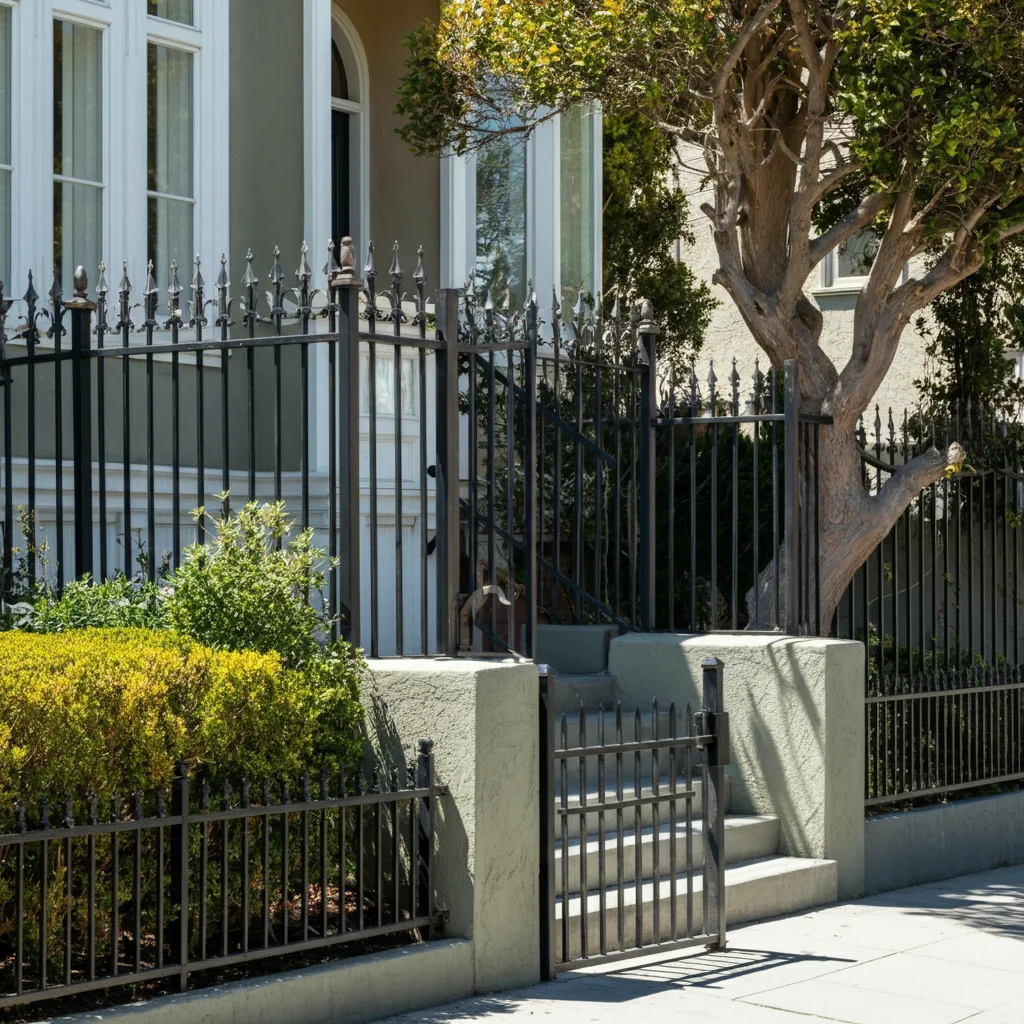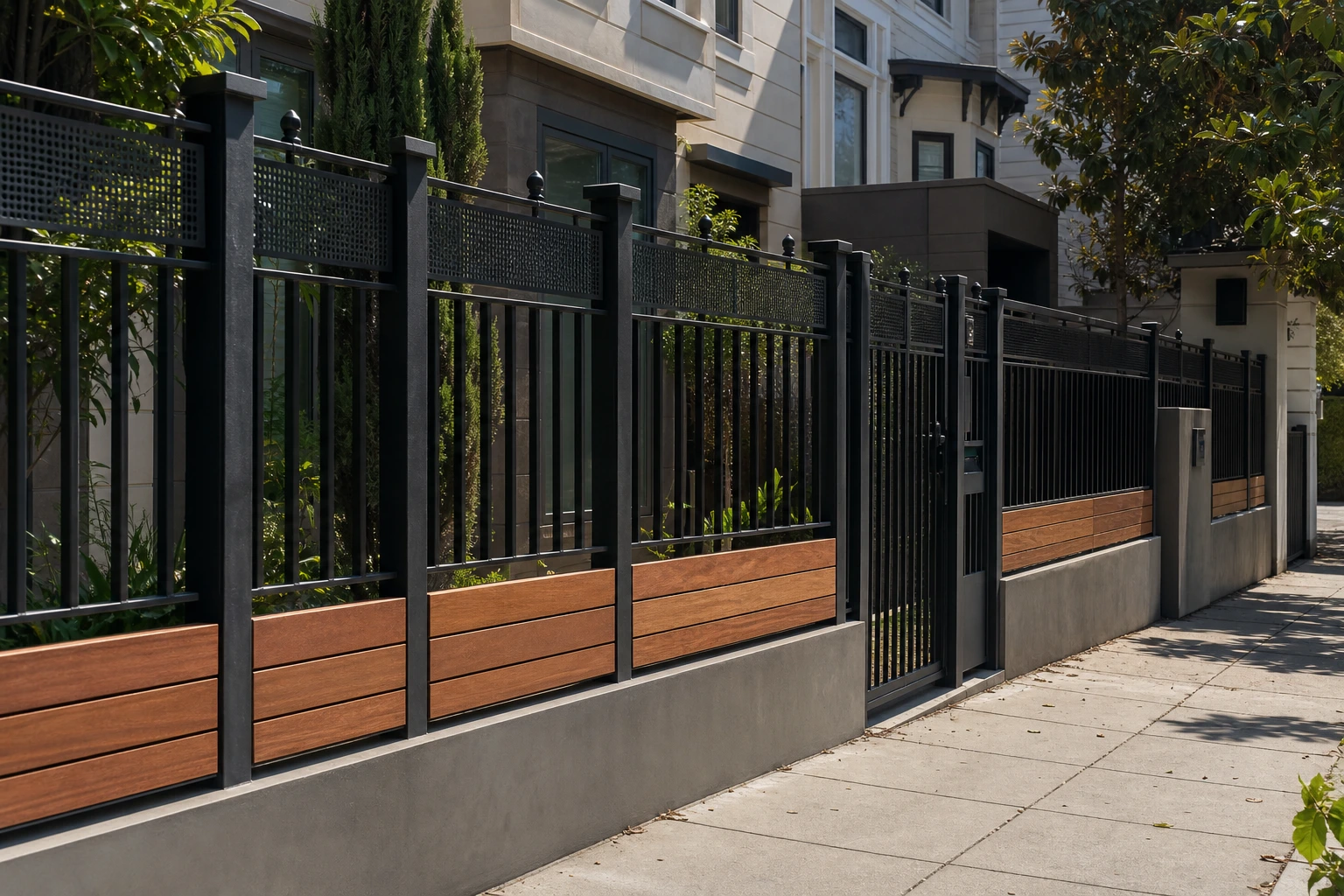
For Pacific Heights properties, the best mixed-material iron fence is rarely a single default style. In practice, the strongest options are custom systems that pair an ornamental metal frame with wood, masonry, glass, or privacy panels according to four variables: how much privacy the frontage needs, how closely the fence should match the home’s architecture, how the site handles grade changes or retaining walls, and how much ongoing maintenance the owner is willing to accept. Wood infill often helps when privacy matters most, masonry pairings usually suit more formal or traditional compositions, and glass tends to fit contemporary homes or view-sensitive layouts, but the right answer depends on how those priorities overlap on the actual site.
A mixed-material iron fence should be defined clearly before design decisions start. In residential work, what people often call an "iron fence" is commonly an ornamental metal system rather than true wrought iron. Supplied industry sources explain that modern "iron" fencing is typically welded or extruded steel with a powder-coated finish, while true wrought iron is now uncommon and mostly associated with restoration or specialty custom work. In this article, "mixed-material iron fence" means an ornamental metal fence or gate system, usually steel unless noted otherwise, designed from the start to work with a secondary material such as wood, stone, or glass rather than functioning as a standard all-metal ornamental fence with an accent added later.
That distinction matters because standard ornamental metal fencing and mixed-material systems solve different problems. A conventional all-metal ornamental fence is primarily about openness, perimeter definition, and decorative metal detailing. A mixed-material system asks more of the design: the frame material, infill material, finish, joints, attachment points, and visual weight all have to be resolved together. In Pacific Heights, where frontage character, neighborhood fit, and steep or constrained sites can all matter at once, that added complexity is usually what makes mixed-material fencing more effective than a standard all-metal fence alone.
Choosing the right pairing for privacy, architecture, and gates
The pairing is the project. Ornamental metal with wood usually makes sense when an owner wants more privacy than an open steel picket fence can provide but does not want the frontage to feel fully walled off. Wood can soften the look of steel and create screening where an all-metal fence would remain visually open, but increased privacy changes more than appearance. Before choosing dense wood or another opaque infill, it is worth weighing how concealed the frontage becomes, what sightlines remain from doors and windows, and whether gate areas should stay more open than adjacent panels.
Ornamental metal with stone or masonry usually works better when the goal is a more formal edge, a stronger visual base, or a frontage that should feel tied to entry steps, columns, retaining walls, or the house itself. That combination often fits traditional architecture more naturally than glass does. Ornamental metal with glass tends to solve a different problem by preserving openness while still creating enclosure, which is why it typically aligns better with contemporary homes and view-sensitive layouts. None of those pairings is inherently best. The right choice depends on which tradeoffs a property can support without forcing the architecture or making the frontage feel disconnected from the street.
Gate design needs to be resolved separately from fence panel design because the best material combination for one is not always the best choice for the other. A privacy panel may work beautifully with heavier wood infill, while the matching pedestrian or driveway gate may become too heavy or too dependent on hardware if built the same way. Weight, hinge loads, latch integration, opener compatibility, and how the secondary material is attached should be considered early, especially when the base frame is steel and the infill adds significant mass. Treating the gate as an afterthought is one of the easiest ways to turn a good-looking concept into a difficult installation.
Style decisions should also stay consistent with the actual metal system being used. Supplied sources distinguish true wrought iron from ornamental iron fencing and note that many modern "iron" fences are really welded and powder-coated steel made to achieve a similar look. Those same sources describe modern ornamental steel as strong and identify decorative choices such as finials, scrolls, and custom designs, while noting that matte black or satin black is the most popular finish. That means style is driven first by profile, ornament, and proportion, then by finish color. Clean verticals and restrained tops usually read more contemporary, while finials and scrollwork push a design toward a more traditional expression.
Pacific Heights site conditions make standard answers less reliable
Pacific Heights makes design decisions less forgiving because the fence is often part of a highly visible frontage rather than a background utility feature. A fence there has to do more than provide security. It has to manage privacy, curb appeal, and neighborhood fit without looking indifferent to the house or the street. When a property has traditional architecture or historic character, the fence usually works best when it feels composed with that context rather than trying to stand apart from it as a separate design statement.
Steep grades, stepped entries, and retaining conditions also change what looks convincing once a design leaves the rendering. A material combination that appears crisp on paper can become awkward when panel heights need to step, post spacing shifts at a slope break, or a gate lands next to a retaining wall. Mixed-material systems amplify those issues because each material introduces its own proportions and tolerances. That is why panel layout, transitions, and termination points matter as much as the material palette itself.
Attachment to existing masonry or stucco walls is another area where concept drawings can be misleading. Using an ornamental metal panel or gate with existing walls is not only a style choice. The wall condition, reinforcement, substrate thickness, and actual load path may determine whether the idea is practical at all. A steel-framed gate or panel can impose forces that an older wall was never intended to carry, so feasibility often depends on structure and anchoring, not just appearance.
Durability decisions should be handled with the same site-specific mindset. Supplied sources consistently present galvanization and powder coating as important protective measures for ornamental metal fencing, including resistance to rust, fading, UV exposure, and general weather wear. But finish performance is still heavily shaped by microclimate and detailing, especially near coastal exposure and anywhere irrigation, trapped moisture, or poor drainage keeps water at joints and edges. Protective coatings matter, but they do not erase the consequences of bad detailing or a wet site.
Where mixed-material systems succeed, and where they fail
Most mixed-material fences fail at the transitions rather than in the basic idea of combining materials. Steel and wood do not move the same way, glass demands precise alignment and support, and masonry connections depend on sound anchoring and separation details. If water can sit where materials meet, components may age unevenly even when the original design looked refined. Good mixed-material work is less about dramatic combinations than about how carefully each junction is resolved.
This is also where the disadvantages of metal fencing need to be stated plainly. Supplied sources describe modern ornamental steel as strong, durable, and low-maintenance when properly coated, and some specifically say modern welded or extruded steel systems with powder-coated finishes are stronger, more consistent, and more rust-resistant than older assumptions about iron would suggest. Even so, metal fencing is not maintenance-free, and a mixed-material system adds complexity rather than reducing it. The frame, finish, infill, and hardware will not all weather at the same rate, and repair access can become harder once multiple materials are locked together.
The practical ownership question is therefore not just how long the fence lasts. It is which component is likely to need service first and whether that component can be repaired or replaced without disturbing the rest of the system. On one property, that may be refinishing the steel frame. On another, it may be replacing weathered wood boards, adjusting gate hardware under added weight, or addressing moisture where a panel meets masonry. Long-term success comes from matching the material combination to the owner's tolerance for upkeep as much as to the architecture.
Cost follows the same logic. Mixed-material projects are typically shaped by customization, site conditions, fabrication complexity, the finish system, and how the fence meets grades, walls, and gates. Because those variables interact, generalized pricing can miss the factors that materially change the scope. That is especially true when the concept involves existing masonry or when gate design differs materially from adjacent fence panels.
The best fit is the combination that still works after the site is measured
For Pacific Heights, the best mixed-material iron fence is the one that still makes sense when privacy goals, architectural style, site conditions, and maintenance are considered together instead of one at a time. Wood, stone, glass, and privacy panels can all be the right secondary material when paired with an ornamental steel frame for the right reason. The strongest designs are the ones that respect the house, the street, the grade, the gate loads, and the way the materials will actually age.
For related details, review What Pacific Heights Homeowners Should Expect When We Match a Restored Historic Iron Fence to and Welded vs. Ornamental Iron Fences in the Bay Area: Daily-Use Differences for Gates, Privacy, and.
That is why custom work becomes necessary so quickly in this category. Once a project depends on privacy level, openness at the entry, retaining conditions, existing walls, gate hardware, and finish durability all at once, the decision is no longer about selecting a standard panel. It is about designing a system. In Pacific Heights, that systems approach is usually what separates a fence that merely looks expensive from one that genuinely fits the property over time.